Back to the Future:
Three Letters, One Mission
To Gen Z. To the Boomer who knows. To the investor who understands data. 268 million Americans feel it but can't describe it — they'll know it when they see it.
There's a number that stopped me cold. 47%. Nearly half of all young Americans — the generation born into the digital world — said if they had the option, they'd choose to live in the past. Not because life was easier then. Not because they're lazy or ungrateful or don't understand history. But because something in them recognizes, even if they can't name it, that something real was taken. Something that belonged to them before they ever had a chance to choose.
This essay is for them. And for the generation that built the world they're trying to escape. And for the people with capital who want to understand what 268 million Americans feel but can't describe.
It's three letters. One mission.
Letter One · To Gen Z
Tough luck, kiddo.
I mean that with the deepest respect I know how to offer — because your generation, like mine, got dealt a hand of cards to a game we had no idea we were in the middle of. Neither of us understood until it was too late.
For Boomers, that lateness was measured in decades. We watched the system tighten around us slowly enough that we called it progress. For your generation, the lateness is measured by screen size. You were born into it and trapped the moment you could swipe and tap on glass.
I want you to know something that most people in my generation won't say out loud:
We watched as proud fathers while our 3-year-olds navigated iPads and we thought we built something great. We were wrong.
Not because technology is evil. But because we handed you a tool without understanding who else had their hands on it. We saw the wonder on your face and didn't see what was behind the screen looking back at you.
You have little context for this, so you blame the first people you see — us. I understand that. But you would be greatly mistaken. We built this city. We are not running it.
What's running it is an ideology nearly as old as time — one that has always understood that the most profitable human being is a dependent one. One who doesn't trust their own judgment. One who needs an institution, a platform, a feed, an algorithm to tell them who they are and what they want. Edward Bernays understood this in 1929 when he convinced women that cigarettes were freedom. The architects of the attention economy understood it in 2007 when they put infinite scroll in your pocket and called it connection.
You were the target market before you were born.
Now here's something I need you to hear, because I think you've gotten this part wrong:
You think of the 90s as nostalgia. I want nothing to do with them either.
The grunge fashion and the cassette tapes were charming. What came through that dial-up modem was not. The 90s weren't the world before the machine — they were the opening act. The surveillance economy you're trying to escape didn't arrive fully formed in 2007 when the iPhone launched. It was designed in the decade you romanticize, by people who understood exactly what they were building and who they were building it for.
So you and I want the same thing. Not the 90s. Not the 50s. The world that existed before the machine decided it knew better than the human.
For me, that world started just before the Industrial Revolution — before we built bombs and landfills and the logic that the Earth exists to be extracted from. Before we decided that efficiency was more important than dignity, that productivity mattered more than presence, that what couldn't be measured couldn't be valued.
You feel that world in your bones even though you never lived in it. That longing has a name — researchers call it anemoia, a nostalgia for a past you never experienced. It's real. It's not weakness. It's your nervous system telling you that something essential is missing from the environment you were handed.
Here's what the data shows, and the data doesn't lie: 80% of your generation says America is on the wrong track — the highest of any age group ever surveyed. 62% of you expect your lives to look worse than your parents'. 7 in 10 people globally — across every age, every income, every political leaning — are now hesitant or unwilling to trust someone different from themselves. The Edelman Trust Barometer calls this "insularity." I call it what happens when you replace genuine human terrain with curated digital terrain for twenty years running.
You are not broken. You are the predictable output of a broken system.
And here's the thing about broken systems: they can be rebuilt.
The stories you grew up on — the ones that felt true even when they were fictional — they weren't fantasies. They were memories encoded in culture of a design that worked. A neighborhood where people knew each other. A table where families argued and laughed and solved things. A trail where two strangers became friends because the mountain didn't care what they believed politically.
That world isn't gone. It's been buried under the one built on top of it. The outdoors is where it still exists. Every trail, every campfire, every sunrise you don't photograph because you're too busy watching it — that's the world your instincts are reaching for when 47% of you say you'd rather live in the past.
You don't want the past. You want what the past still had that the present has lost.
So do we.
Letter Two · To the Boomer Who Knows
You recognize what I'm describing.
Not because someone told you. Because you lived on both sides of the line — before the algorithm and after. You remember what Saturday morning felt like before there was a screen in every room. You remember conversations that wandered without destination. You remember neighborhoods where people showed up when things went wrong without being asked.
And you've watched, for thirty years, as those things quietly disappeared — replaced by things that looked like connection but functioned like isolation.
Here's the uncomfortable truth that some of us have to say:
We let it happen. Not out of malice. Out of pride. Out of prosperity. Out of the very materialism that capitalism rewarded us for and that Adam Smith never accounted for when he designed the invisible hand. He assumed the self-interested man would be moral. He forgot to build the mechanism that made morality more profitable than extraction.
We built the infrastructure of the attention economy, bought stock in the platforms, watched the quarterly earnings, and told ourselves the market would sort it out.
The market sorted it out. It sorted our grandchildren into anxiety diagnoses. It sorted our children into the two-income trap that left nobody home when the algorithm came calling.
Nearly half of all antidepressant prescriptions for children were written in the years after the smartphone became standard household equipment. One in five American children now has a diagnosable mental, emotional, or behavioral disorder. The algorithm didn't cause all of this. But it didn't help. And we funded it.
That's on us. Not entirely. But enough.
Here's what I also know: we still have time.
My generation has something Gen Z desperately needs — not advice, not lectures, not another TED Talk about what they're doing wrong. Knowledge. Earned knowledge. The kind that comes from having tried things and failed at them and gotten up and tried again. From having built things with your hands. From having sat across a kitchen table from someone who disagreed with everything you believed and worked it out without logging off.
They have something we're running low on. Passion. Urgency. The particular energy of a generation that knows something is wrong and hasn't yet been beaten into accepting it as permanent.
Your passion. Our knowledge. Together we don't become 2. We become 3.
That's not sentiment. That's what happens when experience meets urgency and both finally point in the same direction. It's the same logic behind every great partnership ever funded — the combination produces a capability that neither party has alone.
But only if we're willing to do something hard. We have to let go of the idea that what we built was the final word on what's possible. We have to be willing to say — in public, to our grandchildren — I watched you navigate an iPad at three years old and I called it genius when I should have called it a warning.
We have to use the wealth and the wisdom and the years we have left not to protect what we accumulated, but to rebuild what we accidentally dismantled.
The outdoors is where that starts. Not because nature solves everything. But because it's the one environment that cannot be owned by the platform. The one place where the algorithm has no jurisdiction. The one terrain where two people who disagree about everything can stand on the same mountain and be made small by the same wind and remember what they actually share.
We still have a life worth finishing strong. Let's finish it building something that lasts longer than we do.
Letter Three · To the Investor
You came for the data. Here it is.
268 million Americans feel something they cannot name. They feel it in the way they pause before opening their phone in the morning. In the way they describe their best days as the ones spent outside. In the way they show up to political battles exhausted and leave more hopeless than when they arrived. In the way 47% of the youngest adult generation would choose a past they never lived over a future they were promised.
What they feel is the gap between the life the digital economy sold them and the life their biology was designed for. That gap is your market.
Not a niche. Not a demographic. A civilizational inflection point — the moment when a society collectively decides that the extraction model has taken everything it's going to take, and starts building the replacement.
The data is unambiguous:
The 2026 Edelman Trust Barometer — 33,938 respondents across 28 countries — documents that the income-based trust gap has more than doubled since 2012. The U.S. carries a 29-point gap between high and low income trust in institutions — the largest of any developed nation measured. Only 32% of people globally believe the next generation will be better off. Government trust: 53. Media: 54. Business — actual business, the kind that makes things and solves real problems — is the only institution still in positive trust territory at 64.
The NBC / SurveyMonkey Gen Z Poll, April 2026 — 32,433 respondents — shows 80% of Gen Z say America is on the wrong track. 62% expect their lives will be worse than their parents'. 47% would choose the past over the present.
Fortune, April 2026 — the analog economy driven by Gen Z's deliberate rejection of digital captivity is already a $5 billion market growing toward $23 billion by 2035. Digital detox cabins, vinyl records, dumb phones, physical experiences that cannot be screen-mediated. This is not a trend. This is a renegotiation.
KOA's 2026 Camping and Outdoor Hospitality Trend Report — 52 million North American households camped in 2025, surpassing pre-pandemic records. Gen Z and Millennials made up 61% of new campers in 2024. 49% of all campers now intentionally plan trips to improve their mental wellbeing. 77% say simply being in nature is enough — no programming or extras needed. 55% of Gen Z say they are likely to rent an RV in 2026 alone.
The market isn't waiting to be created. It's already moving. The question is who builds the infrastructure for it at scale.
That's Tymmber.
Not a camping company. An infrastructure company for sovereign human experience. A three-stage ecosystem that captures and consolidates spending across a lifetime journey: 112 million addressable participants, $3.71 trillion in combined economic contribution, $275,000 in customer lifetime value per household.
Stage One — The Mobile Sovereign (ages 18–35): The RAAK for the young adult who packs the truck before the alarm goes off. Not running from anything. Running toward the version of themselves that only shows up when the grid goes quiet.
Stage Two — The Intentional Village (ages 35–60): The Trailpod, the Casita, the RoadSchool curriculum for the family building a template that their children will inherit. What they choose to do outside shapes what their kids believe is possible.
Stage Three — The Grid-Independent (ages 60+): The Casita on two acres. Solar panels. Rainwater system. No utility bill. No landlord. No permission needed. The long game, landed.
Every product in the ecosystem is designed to answer the same question that 268 million Americans are asking without knowing how to ask it: How do I get back to a life that feels real?
The answer has always been the same. Go outside. Stay longer than you planned. Let the terrain do what the algorithm cannot.
Two generations got dealt the same hand to a game neither one chose. A Boomer who watched his toddler swipe an iPad and called it progress. A Gen Z adult who'd choose the 1990s over the present — not knowing the 90s were the beginning of the thing they're fleeing.
Both of them want the same world. A world that existed before extraction became the operating system. A world free from the manufactured despair that keeps dependent people buying palliatives from the same institutions that made them sick.
Your passion. Our knowledge. 1+1=3.
That's not nostalgia. That's the design brief for what comes next.
268 million Americans feel it but can't describe it. They'll know it when they see it.
Everyone fights for a New World Order.
The question is whose.
Theirs was built on dependency — on platforms you didn't choose, algorithms you can't see, and institutions that profit from your confusion.
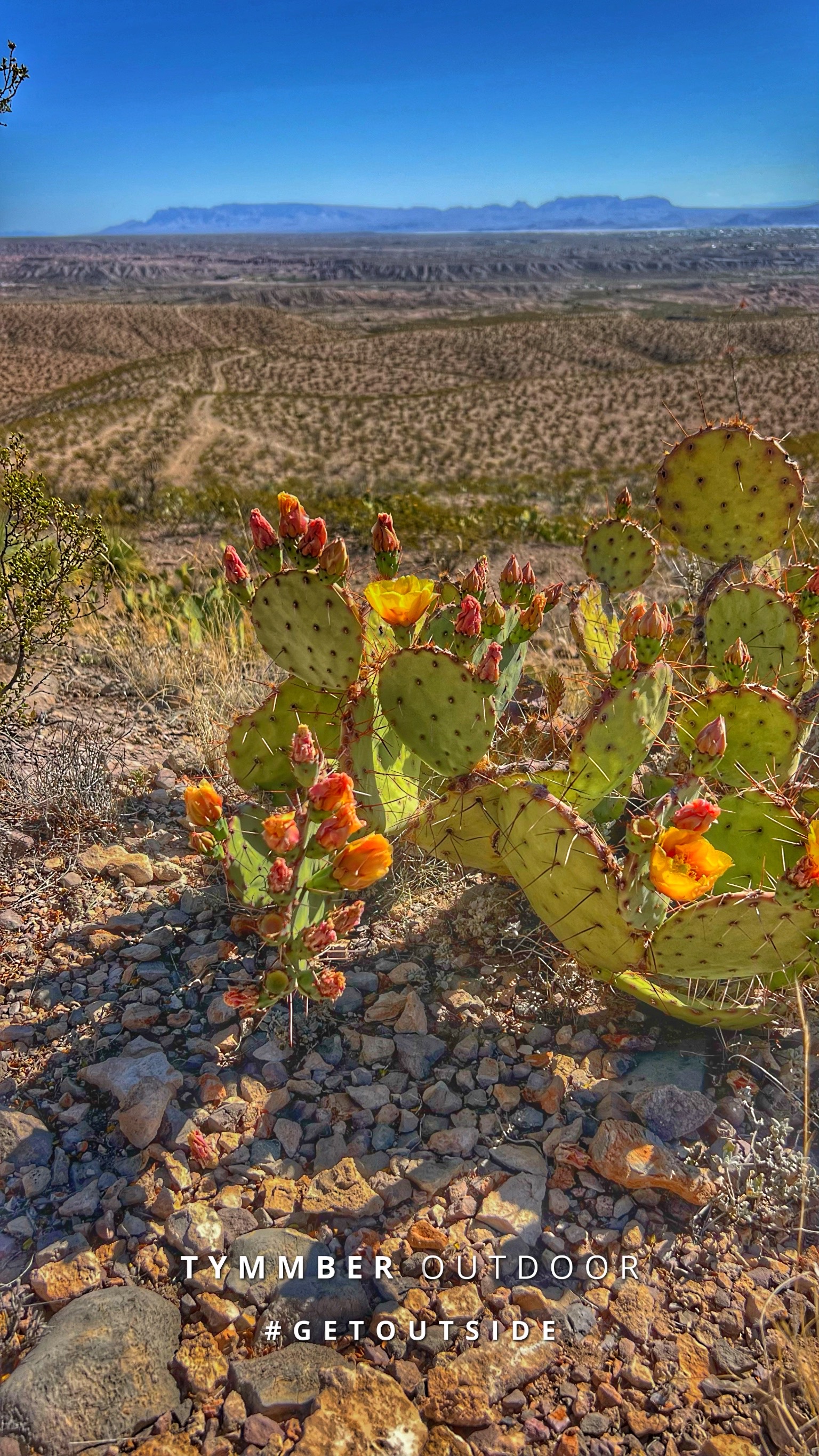
Ours is built on a dirt road in the high desert that was here before they arrived and will be here long after they're gone.
Same phrase. Different world entirely.
Mike Isaacs is the Founder and CEO of Tymmber Outdoor Products. He has spent nine years living the field research — 30,000 miles, 1,000 nights outdoors, temperatures from below zero to 110 degrees — that forms the empirical foundation of everything Tymmber builds. He writes from Sierra County, New Mexico.
Data sources: NBC News / SurveyMonkey Gen Z Poll, April 2026 (n=32,433) · 2026 Edelman Trust Barometer (n=33,938, 28 countries) · Fortune / Luba Kassova, "Gen Z Is Engineering an Analog Future," April 2026 · KOA 2026 Camping and Outdoor Hospitality Trend Report · Deloitte Global Gen Z and Millennial Survey 2025 (n=23,000+, 44 countries) · Harmony Healthcare IT Gen Z Digital Health Survey, May 2025 (n=1,010)